
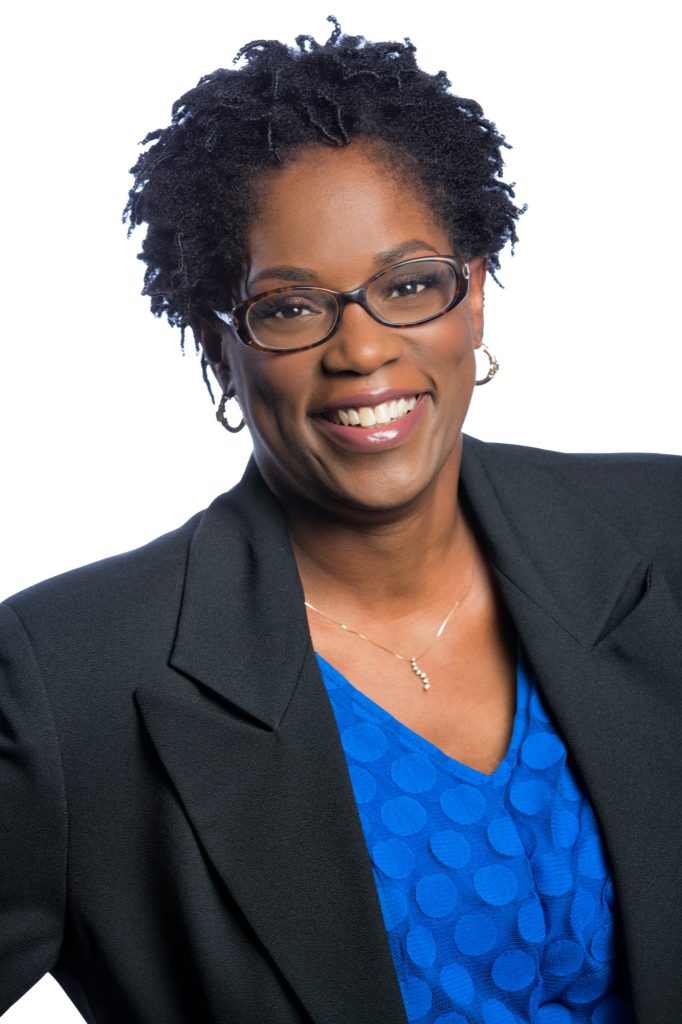
On Aug. 20, 2013, Antoinette Tuff, the bookkeeper at R.E. Mc Nair Discovery Learning Academy in Decatur, Georgia, was taken hostage by a 20-year-old man reportedly carrying an AK-47 with more than 500 rounds of ammunition.
Tuff credits compassion, confidence and control – what she calls Tuff Tactics – for saving the day. In those frightening moments with the gunman, Tuff remained calm, convincing him to give her the weapon. She connected with him on a personal level. All 1,000 students and staff at the school stayed safe that day. After the hostage situation, Tuff felt pulled to do something different. In 2013, she launched her own company using the Tuff Tactics she developed: compassion, confidence and control. "From 2013 to 2021, I worked for God," Tuff says. "What I realized from being held hostage was that I was able to make it an inclusive environment."She speaks to corporations, nonprofits and school districts about diversity, inclusion and psychological safety to reconnect leadership teams to their employees. Her goal is to make sure everyone feels appreciated and valued. "We do team building," she says. "We build cohesion within the organization and bring about inclusion within the organization."More anxiety, depression Mental Health America's recent study shows the number of people screening for anxiety and depression has increased significantly since 2020. Between January and September, 315,220 people were screened for anxiety, a 93% increase over the 2019 total number of anxiety screens. For the same period, 534,784 people screened for depression, a 62% increase over the 2019 total number of depression screens. Black or African American screeners saw an overall increase in screenings, from 33,696 in 2019 to 91,170 in 2020. The average rate of moderate to severe anxiety among Black or African American screeners increased from 70% to 78%, and symptoms of moderate to severe depression increased from 77% to 84% from February to September in 2020, according to MHA's report. The top three concerns for Black or African American screeners were loneliness and isolation (69.24%), past trauma (53.1%) and relationship problems (42.58%).Unfortunately, mental health professionals aren't immune from the effects of pandemic trauma, or stress, burnout and uncertainty. And according to the American Psychological Association, mental health professionals are at full capacity with longer waiting lists of patients than in the past. For counselors, social workers and therapists in need of methods to manage their pandemic trauma, Tuff offers some pertinent advice. The gift of compassion When Tuff speaks to corporate clients about compassion, she focuses on connecting and empathizing with others in the workplace. She promotes being flexible and offering employees support in a crisis. Mental health professionals can also extend compassion to themselves."Take care of yourself in small bites," Tuff says. "Stop for a moment and take a breath. It's all right to take care of you."Tuff urges mental health professionals to engage in self-care. She likens self-care to what a flight attendant says before an airplane takes off: "In case of an emergency, put on your mask first." If mental health professionals aren't healthy, they won't be able to help others, she says. In her "Living on Purpose" workshops for women, Tuff recommends Mommy Time: Listen to music, breathe, talk to your higher power and sit in the car for a few minutes before you go into the house or the office. "You got to take a moment," she says. "That goes for males and females."The power of confidence In 2013, Tuff thought it was a joke when the gunman entered the elementary school where she worked. Once it became clear it wasn't a prank, she instantly acted with a confidence she didn't realize she had.
People walking into a practitioner's office want someone who is confident in what they say and do. "It's not until someone comes to you with their emergency that it becomes your urgency," Tuff says. "They're looking for you to have compassion for them, confidence in what you're about to tell them, and they're looking for you to be in control of the situation."Confidence building, according to Tuff, occurs in several ways. She recommends surrounding yourself with a like-minded community that is going to support you, and finding a group of powerful men and women who will help you walk your purpose and be a servant to others.
The reality of control Tuff wasn't under any illusion she was in control the day the gunman walked into her school. She prayed she and the children would go home at the end of the day. Her priority was to keep everyone safe. The experience prompted Tuff to teach others to ask themselves, "Is what I am about to do going to bring life or is it going to bring death?" She suggests changing your point of view: Water down the issue rather than make it a mountain, she says. "You've got to be able to put things in perspective," Tuff says, "and always put you first." In 2014, Tuff founded Kids on the Move for Success, a nonprofit supporting children by applying Tuff Tactics. That same year, Tuff wrote about the harrowing hostage experience in "Prepared for a Purpose." Lifetime TV produced the movie "Faith Under Fire" in 2018, starring Toni Braxton as Tuff during the hostage situation. Tuff has been the recipient of awards from organizations including Delta Sigma Theta and the Foundation for Improvement of Justice. Tuff grew up in Washington, D.C., and moved to Georgia in 1995. She has two adult children and two grandchildren. She is the keynote speaker at this year's Black Mental Health Symposium, whose founder, LaTonya Summers, is also publisher of Black Mental Health Today magazine. In early 2021, Tuff returned as the bookkeeper at Mc Nair, the elementary school where she was held hostage. "It put me in a place to support them on the ground in the schools," she says. "I'm whatever they need at the school. I make sure when they come in those doors, they're healthy and when they leave, they're healthy."‘Hard for us to say no'Dwayne Brown, a licensed clinical social worker, offers telehealth through his private practice, Brown Group Wellness, based in New York City and Narrowsburg, New York. He's taught workshops to mental health professionals about combatting burnout and compassion fatigue using coping skills and self-care. Brown recognizes the effects of the pandemic on Black and brown mental health professionals. It's meant more cases and daunting issues, all within a short time. "It's hard for us to say no," he says. "We'll take things on, not paying attention to our bandwidth. We're almost held hostage because we're not respecting our capacity. We get called to action and we just move."Vacations and spa days don't fight burnout, says Brown. It's the everyday care such as drinking eight glasses of water; sleeping seven to eight hours each night; spending quality time with family and friends; getting your heart rate up for seven minutes, three times a week; and turning off work at the end of the day. "Stay in tune with your needs," Brown says. "Stay in tune with your thoughts and stay in tune to your behaviors."
Vanessa Infanzon is a freelance writer in Charlotte, North Carolina, whose wide-ranging work has been published by regional and national media outlets.
"Yoga focuses on mindful movements, intentional breathing and creating harmony between the mind and body.

Dwayne Brown, a licensed clinical social worker, says it's hard for Black and brown mental health professionals to manage the increased demands on their time.

The average rate of moderate to severe anxiety among Black or African American screeners increased from 70% to 78%, and symptoms of moderate to severe depression increased from 77% to 84% from February to September in 2020, according to a report by Mental Health America.
First published in Black Mental Health Today, Summer 2022 (Vol. 4).