
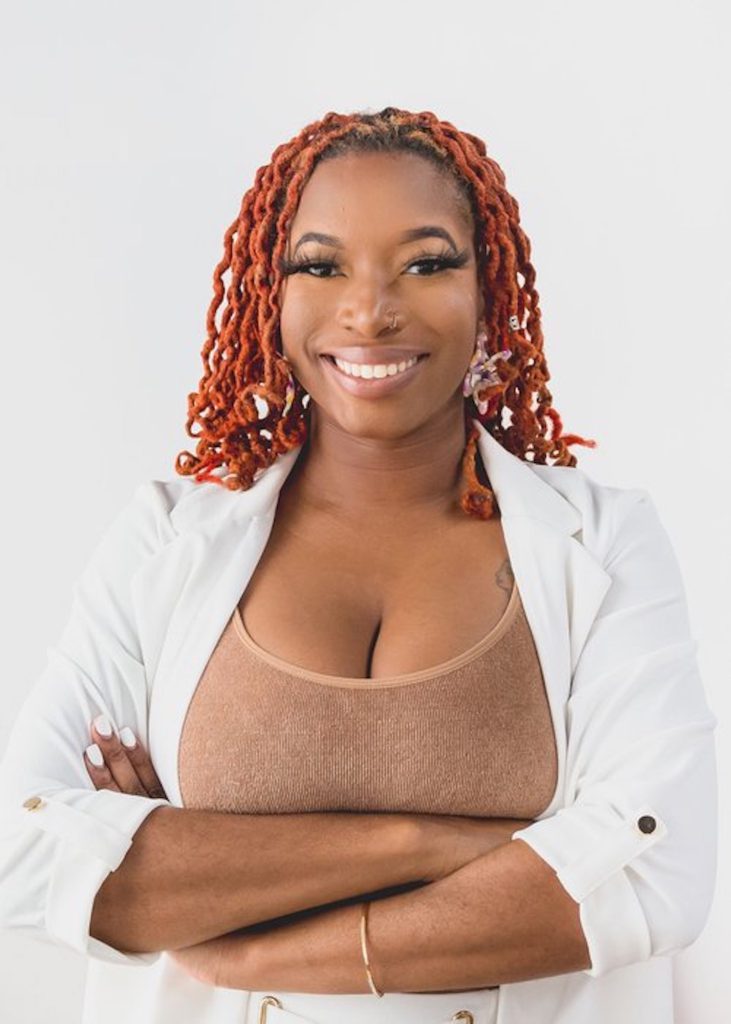
A ntiracist allies are often described as co-conspirators or with other terms that sometimes seem to conflate antiracist work and criminality. But Meaghon E. Omobude, a graduate candidate studying clinical mental health counseling at Marymount University in Virginia, explained that the disruptive nature of antiracist work is a necessary and good thing.

“I think being an ally is often where the conversation starts and ends for most white mental health providers. We need more white mental health providers that are also willing to be accomplices,” she says. “I believe white colleagues in counseling and in the mental health field overall have an obligation to use their privilege to dismantle the systems and structures that create harm for Black colleagues and clients.”Researchers describe white allies as those who demonstrate an understanding of institutional racism and racial privilege while committing to use that privilege to create meaningful change. For example, simply promoting diversity does not make someone an ally – as diversity does not transform a currently broken system into an equitable, safe space. Allies should actively combat racism through disruption of the status quo by directly challenging harmful patterns, standards or approaches to promote equity. ‘It starts with being able to listen’White mental health providers might feel motivated to live in alignment with being an ally but often struggle to practice true allyship. “It starts with being able to listen and decenter yourself,” explains Omobude, which is difficult for many white people who have not yet confronted their own issues with paternalism, saviorism and fragility. “Seeking to undo racism while continuing to benefit from racism is a state that is impossible to fully reconcile,” says Avital Isaacs, a licensed master social worker with the Manhattan Alternative Wellness Collective in New York City. “There is no amount of good-doing that exempts or extracts someone from their privilege.”She notes that decentering whiteness is ongoing work that requires constant monitoring and reflection. “I don’t think that, in good faith, any white person could assure any Black person that they are a ‘good ally’ and be able to guarantee the veracity of the claim,” says Isaacs, who is white. Performative or shallow claims of allyship often include superficial attempts to engage in racial justice work that won’t support Black people or even keep them safe, explains Atiya Stewart, who is a licensed graduate social worker with Bee Network, a virtual practice that aims to support Black clients. A good ally will not just call out other people’s mistakes. Rather, Stewart says, a good ally is aware of their own limitations regarding expertise, competency and scope of practice. This includes noticing and confronting their own racist discomforts or judgments, then thinking critically about those feelings and challenging them, she says. Many people who hope to be allies don’t recognize the risks of collaborating and might back out when allyship becomes too hard. Stewart says white providers should ask themselves, “What am I willing to put on the line?” before describing themselves as allies. Researchers say white counseling professionals should understand the goal of allyship is not to arrive at a fixed level of competence but to continually take steps to unlearn racist socialization and engage in an ongoing commitment to decentering whiteness. Assumptions made by well-intentioned providers contribute to continued disparities in the quality of care Black clients receive. These include the belief that access alone will reduce disparities and that current approaches align with the needs and preferences of people of color. Additionally, tailored treatments might not include the same approaches used for white clients. Listening, speaking without bias Even subtle biases can have profound impacts on the way mental health concerns of people of color are conceptualized, diagnosed and treated. Black clients, whose depression is less likely to be detected, explain that they have been mistreated and excluded when seeking mental health care and are less likely to feel their treatment for depression is adequate compared with white peers. Researchers believe disparities in quality of care result from barriers to effective communication between Black clients and providers of other races, leading to an inability to meet their needs in those settings. “Black people want someone they can relate to, and that’s not always white people,” Stewart says, emphasizing that white allies should be able to refer Black clients to Black providers if it will serve those clients best.JaNaé Taylor, Ph.D, a licensed professional counselor who provides care exclusively to Black clients at Taylor Counseling and Consulting Services in Virginia Beach, Virginia, says white therapists should set the tone for the relationship by having intentional conversations that promote safety. They should assure Black clients that the experience will be collaborative by reminding them that they are experts about their own lives; to interject if they feel misunderstood; and to call out problematic assumptions, behavior or language. Taylor says she’s had Black clients whose previous white therapists made stereotypical generalizations, such as projecting the idea that a strained relationship with a father meant he was estranged or incarcerated. “They need to be able to sit in the space and trust that their story is not going to be taken away from them or transformed into something that isn’t true,” she adds. She explained that nuance and body language are often cultural competencies that get overlooked by people who hope to be allies, and when these aspects of communication are misunderstood, Black colleagues and clients suffer. For example, she’s been disappointed when white colleagues described their Black clients as oppositional, defiant or resistant to change. “When I followed up to ask how they made those assessments, it would come out that something was missed,” she says. “A question wasn’t asked or there was a misinterpretation of an answer or a client’s body language should have cued that they weren’t comfortable. In the good moments, I was able to challenge that – but in the worst, I didn’t even feel safe.” She says her own facial expressions in mundane workplace meetings have been misinterpreted as hostile and aggressive.A good ally, says Taylor, will ask a Black colleague how to respond in specific situations, what kind of ongoing support they need and what tangible steps they can take to mitigate problems.
‘Advocacy can be infectious’Taylor also says workplaces tend to be shaped by white culture regarding concepts of productivity, communication and labor – underlining the importance of shifting standards that are dominated by harmful or exploitative ideas. Allies can support this effort by advocating for systemic changes. This can look like bringing colleagues into conversations with supervisors during attempts to get raises, workplace accommodations or other benefits. “You might not always have the power to directly give resources, but if you’ve been able to get those resources, let others know. Don’t let the door close behind you. Share the knowledge,” she adds.“(White people) have the power, the voice and the resources in most settings, so they can often create fewer hurdles or call out things that aren’t equitable or helpful to the therapeutic environment,” Taylor says. “Advocacy can be infectious and will spread to other folks who have the power to make a difference.”Lauren Rowello is a Philadelphia-based journalist whose works explore topics related to identity, mental health, relationships and other issues.

First published in Black Mental Health Today, Summer 2022 (Vol. 4).