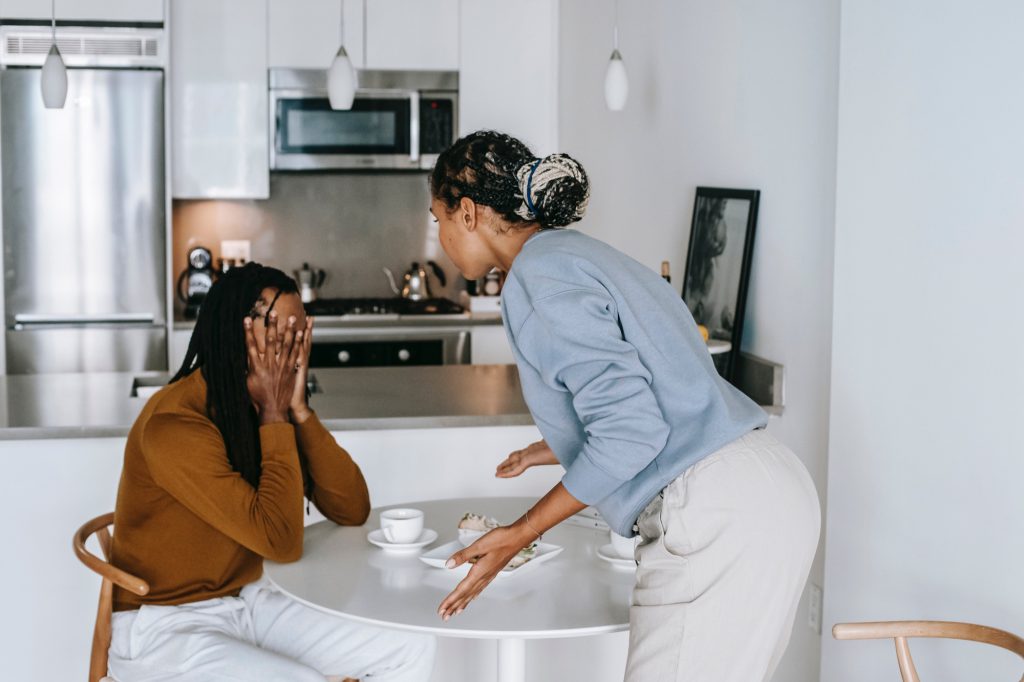
Relationships are tricky. There will be ups and downs, times you dislike one another and other times you consider throwing in the towel. Couples come to counseling for many reasons. One of the top reasons is related to communication. Partners want to feel heard, valued and that their feelings matter. This can be difficult when partners are focused on being right. This causes them to see each other as the enemy or competition as opposed to partners. I recently spoke with Candice Cooper-Lovett, Ph.D., a licensed marriage and family therapist, and owner and CEO of New Creation Psychotherapy Services in Atlanta, Georgia, about what couples should know about fair fighting. Here's what she shared. Understand one another Understanding and agreeing are two different things. If each partner feels understood, it allows space for resolving the conflict in a courageous conversation. Often, couples mistake agreement for understanding. One can understand but not necessarily agree. Understand the power of conflict When done the right way, conflict should increase intimacy. It is an opportunity for couples to listen and hold space for one another as they are sharing disappointment or hurt caused by their partner. This is a form of intimacy that could assist in helping couples feel connected and vulnerable with one another. Understand how to fight Specifically, this means not "hitting below the belt," especially during a vulnerable moment, because this will create division in the relationship. These experiences may cause a partner to fear continuing to bring their concerns or needs to the table as it may come up later as ammo in future arguments. To add to those points, I think it's important for the couples to understand that miscommunication creates the greatest distance between partners. A lack of understanding breeds confusion and conflict, whether in silence or spoken. The best thing you can do to improve your relationship is work toward bettering your communication and deepening your understanding with every day, surface-level conversations as well as deeper, more impactful and higher-order conversations. I instruct my clients who want to "learn to fight better" to instead learn the skills and tools necessary to navigate communication in a way that's conducive to healthy communication. Communicating in this manner eliminates fights and the need to avoid hard conversations – which can help to develop a whole new connection within relationships.
First published in Black Mental Health Today, Spring 2023 (Vol. 7).