
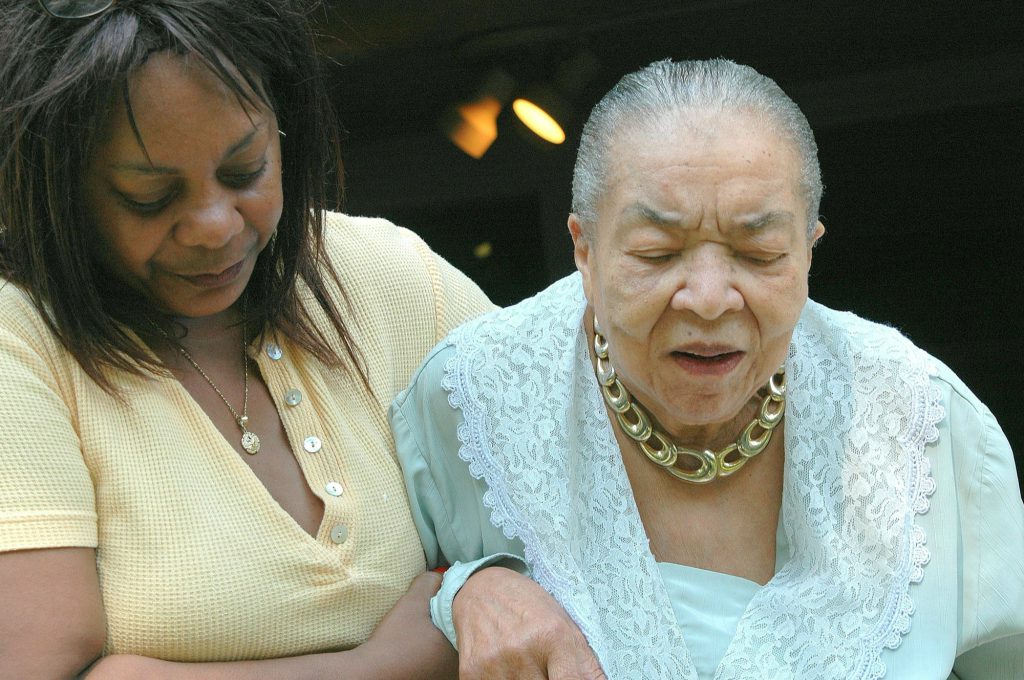
For Arlene Feaster, family has always come first. They are the reason she “has been a caregiver all her life.” Feaster, who lives in Buffalo, New York, and is in her 70s, cared for her sister, Loretta Grayson of Buffalo, for several years ago before she died of breast cancer in June 2012. Feaster felt her presence was important for two reasons: her sister’s mental health issues and her refusal to entrust Loretta’s care to anyone else. Following the death of her sister, Feaster’s 92-year-old mother’s health began to fail. As the oldest sister and the one who customarily “took care of things,” Feaster assumed responsibility for the care of her mother, Lillian Hundley – who was adamant about staying in her Buffalo home and dying there. Feaster, her friends and her church family visited with her mom and made her comfortable until she died on April 28, 2018. According to Family Caregiver Alliance, 57% of Black caregivers engage in what is considered to be “high-burden caregiving” for individuals who require increased functional assistance and a significant amount of the caregiver’s time. Black caregivers spend approximately 30 hours per week caregiving, and half of them find themselves taking care of not only family elders but also children under the age of 18. Feaster believes it’s important to care for family members, “especially when people are sick. They should feel comfortable about who is coming into their home.” She recalls how difficult caregiving can be especially for those seniors, caring for their senior parents or siblings, who are not always computer savvy. When it came to making arrangements for her sister and mother’s care, Feaster wishes “she and her brothers and sisters had discussed what needs to happen” so she did not have to do it alone. She says funds were not readily available for the mounting expenses before and after her loved ones’ deaths. However, Feaster says, she covered the expenses because she knew that, had she been sick, her mom would have done anything for her. Feaster is part of a large contingent of caregivers in the U.S. The Family Caregiver Alliance says more than 75% of caregivers are female, and two-thirds of care recipients are female. And the need for caregivers is rising, says the Centers for Disease Control and Prevention, In 2018, there were seven potential family caregivers per older adult. By 2030, it is estimated there will be only four potential family caregivers per older adult. Kenya Dawson, a mental health therapist and owner of Be Centered Counseling and Consulting in Charlotte, North Carolina, is a caregiver for her mom, who moved in with her daughter because she was unable to return to her home after falling and breaking her leg. According to Dawson, her mother was diagnosed with dementia four years ago and her condition has declined over the past year. “As a therapist treating caregivers,” says Dawson, “I feel having a place to go and be able to express a range of emotions is helpful. (Issues include) learning how to practice and manage self-care, navigating changes in the family dynamics such as having to move a parent in your household. (And) having someone who hears you and can validate what they are feelings is invaluable.” Connie Perkins, a clinical social worker with Southeast Child and Family Guidance in Charlotte says, both of her parents died when she was younger, so she did not provide care for them in their later years. However ,when working with professionals who are caregivers, she notes it is important to “remember the caregiver is an individual. They have a life and identity outside of caregiving, which sometimes gets lost in their role as a caregiver. …” Clinicians have a unique opportunity to lend an empathic ear to clients, such as Arlene Feaster and colleagues like Kendra Dawson and Connie Perkins, who are caregivers for family members, and to acknowledge how they feel about their challenging role and increased responsibilities.
First published in Black Mental Health Today, Fall 2023 (Vol. 9, Anniversary Issue).