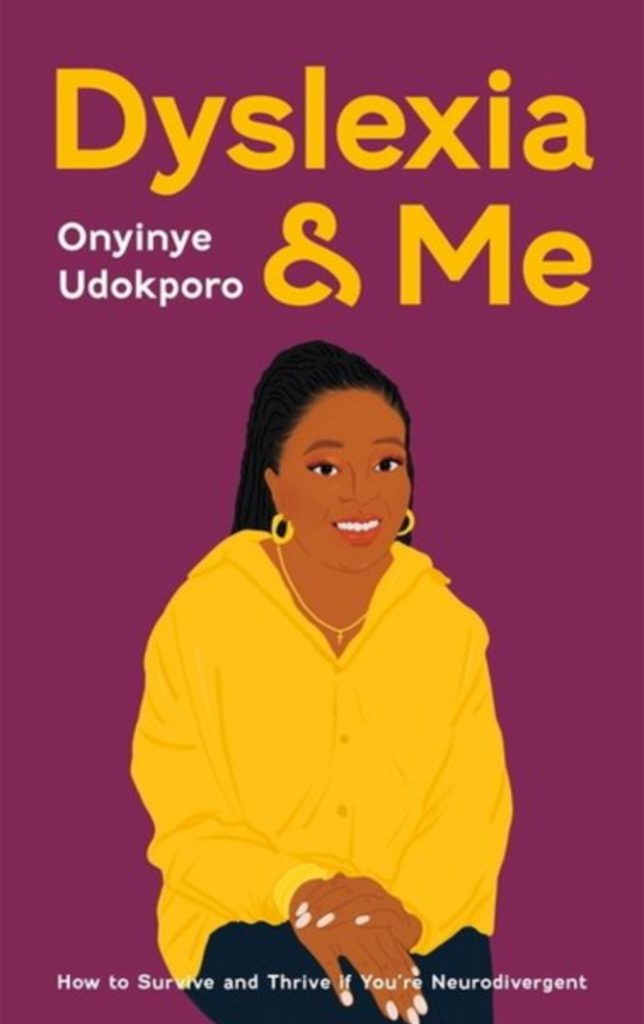
“Dyslexia and Me: How to Survive and Thrive If You’re Neurodivergent” was written by Onyinye Udokporo, a resident of London whose family is of Nigerian descent.
Udokporo wears many hats. She is an entrepreneur (having started a tutoring service at age 12 that she has grown into an online academic assistance program), speaker and writer. In this book, Udokporo shares her personal story about navigating life with dyslexia. These experiences include heartaches and amazing successes as well as some tips and strategies that assisted her or could have if known earlier. “Dyslexia and Me” is an easy read even with such differences as the British use of “tuition,” which requires one to use context clues or search a dictionary to understand the meaning is “teaching” and not the cost associated with learning. While there are no other issues regarding writing style or the conversational tone, Udokporo tended to put certain words in boldface throughout the book in a way that a reader eventually accepts as an attempt for emphasis. This is only notable because it could be viewed as an editing error. Scholarly readers will appreciate the references identified after each chapter. Parents and caretakers will learn ways to provide support to their dependents with similar diagnoses, or understand more about being impacted by dyslexia. Parents will no doubt be happy to read passages (statements) debunking the belief that dyslexia is genetically transferred from mother to child because of an associated gene located on the X chromosome. Youths and adults diagnosed with a learning disorder will find a spectrum of practical steps to take, such as taking guided tours before the start of the new academic year as a method to preserve needed muscle memory. Memorization is a skill Udokporo believes most neurodivergent individuals use to help them hide or overcompensate for the signs associated with their specific condition. For clinicians seeking a book to educate new or existing clients, “Dyslexia and Me” will be a resource for Black individuals hoping their diagnosed condition is not debilitating. For years, Udokporo could only find examples of white males who thrived despite being diagnosed as dyslexic. This book provides a relevant, positive reference for Black clients. Each clinician will need to consider their clients from a holistic perspective when offering this book as a resource because one of the underlying themes is the well-known and often overlooked issue relating to systemic racism and its impact on educational spaces. Racism and inequality that seems inescapable can be triggering for some. While it is important to be aware of, it may not be necessary for a book that purports to instruct readers on how to survive and thrive as a neurodivergent. If nothing else, readers will be impressed with the author and her journey from a little girl trying to best her brother in family spelling bees to a highly educated and award-winning proponent of neurodiversity.
First published in Black Mental Health Today, Winter 2023 (Vol. 6).