Many would agree that racism is an inherent part of many structures and systems within the United States. The psychiatric care industry is not exempt. In January 2021, the American Psychiatric Association – the self-proclaimed oldest national physician association in the country – issued an apology for systematic racism against "Black, Indigenous and people of color." In addition to its apology, the APA expressed a commitment to remediating its wrongs, and creating anti-discriminatory procedures that advance equitable mental health for everyone. In light of the APA's promise to right its wrongs, some may wonder: How can this be accomplished? Is it possible for a purveyor of prejudicial treatment of Blacks for at least 100 years to resolve the issue? If so, what role would members of marginalized communities assume in the process? King Davis, Ph.D., a renowned behavioral health expert and academic, believes Black people can aid the APA in its reckoning. "I think the APA is making an effort," says Davis. "I think people like Altha Stewart, the first Black president of APA, and many others are going to work within the APA to try to make a different way of thinking about that apology, how it can be leaning towards and maybe reducing and maybe eventually eliminating some of the kinds of current issues – in psychiatric education, psychiatric practice, psychiatric thought – about this connection between race and the risk of mental illness."
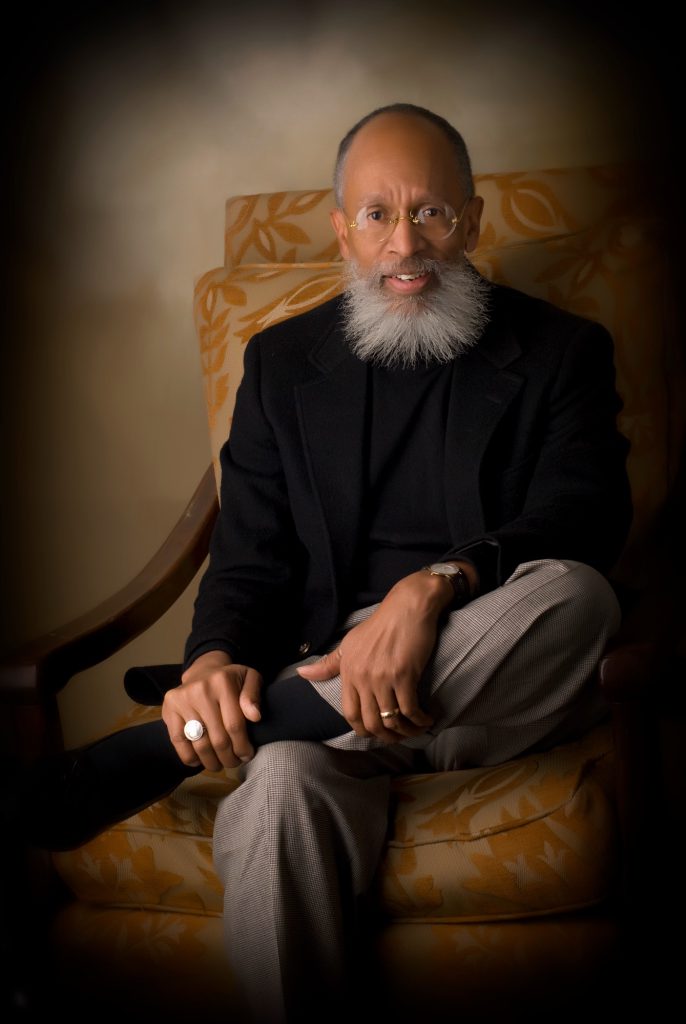
Davis notes an upcoming collaboration between the APA and his organization. "The APA and our group (CSHAP) are putting together an exhibition on the Central Lunatic Asylum for the Colored Insane that will take place in their museum starting in February, Black History Month, 2022. It will be there for six full months and it will cover many of the kinds of documents that have been developed at Central State over 150 years." An intellectual with vast leadership experience in the mental health industry, Davis is currently a research professor in the School of Information at the University of Texas at Austin. Davis is also the Mike Hogg Professor Emeritus at the Institute for Urban Policy Research in the College of Liberal Arts, African and African Diaspora Studies at the University of Texas at Austin. And he is the former commissioner of the Department of Behavioral Health and Developmental Services in Richmond, Virginia. Digitizing the ‘most valuable' records A current initiative under Davis' leadership is the Central State Hospital Archives Project. He and his team are digitizing 800,000 physical records from the first mental hospital for Black people, The Central Lunatic Asylum for the Colored Insane (now known as Central State Hospital) in Petersburg, Virginia. Patient records date from the mental hospital's inception in 1868 through 1968 (during its first 100 years, the hospital was segregated) and from 1970 through 2000 (the period when the hospital was integrated). Saying it had insufficient space to store the records, Central State had planned to discard them. Davis realized the significance of utilizing these records to inform and improve Black psychiatric care today. "The data that we've gathered about Virginia's first mental institution – the fact that it was segregated until 1968, after 100 years – that's the most valuable set of records about mental illness in the United States that's ever been gathered. You can look at it and see how African American people were examined, how they were diagnosed, treated, length of stays in state hospitals and their death rates in those hospitals from 1868 until 1968. We've been looking at this material and putting it in historical perspective, as well as in current perspective."
One of the critical findings during the 13-year period of research was the 1840 United States Census. Essentially, it was the first record that included numbers of people by state, city and race in mental institutions. "It indicated that African Americans who lived in states where slavery did not exist had rates of mental illness that were 10 times greater than African Americans who lived in slave-holding states," says Davis. "The 1840 United States Census became a record of fake data that allowed some Southerners to make a very strong case for why African Americans should not be free." From the 1840s through the 1860s, there was what Davis terms "a change in hypotheses" around this phenomena. Prior to 1840, there was "the ‘immunity hypothesis,' the notion that Black people were happy slaves and we had this built-in ‘situational immunity' from developing mental illness, up until 1840," purports Davis. However, says Davis, "After 1840, what I call the ‘exaggerated hypothesis' took place. The more Black people who were freed, the greater the trouble the United States was going to have. So, the belief among whites was that the best thing was for African Americans to remain in bondage. That concept held from the 1840s until the 1960s." This was the rationale for developing The Central Lunatic Asylum for the Colored Insane in 1868. Its director, from 1841 to 1862, was John Galt. According to Davis, "John Galt wrote the first treatise on asylums for people of color. These writings about bogus labels, such as drapetomania – African Americans running away from slavery as a (form of) mental illness – that was part of it. The entire psychiatric community accepted this notion that freedom was not in the best interest of Blacks or whites." In his book, "The Protest Psychosis: How Schizophrenia Became a Black Disease," Jonathan Metzl, Vanderbilt University professor of psychiatry, claims that whenever Black people advocated for civil rights from the 1800s through the 1980s, they were described as being mentally ill. "As of November 2021," says Davis, "we're still struggling with this issue of whether the quest for freedom – running away from slavery, fighting against the things that happened to Black people during slavery – is indicative of some form of mental illness in African Americans. We're struggling – theoretically, hypothetically, medically, psychologically – for the control of Black bodies and the reconstruction of Black people's minds." Reasons for delays in seeking help Some of the research compiled by the CSHAP team has revealed data consistent with what has long been observed in Black culture. Studies show Black people have delayed seeking help for mental issues for up to 30 years. While Davis asserts that there are many explanations for this, he highlights two reasons. "Our level of literacy about what constituted mental health was very limited and probably almost nonexistent. A second factor has to do with our access to people who provide services to us. Our pastors have been the major source that Blacks go (to) for everything: health problems, financial problems, marital problems, mental health problems, too. We didn't find much in the way of studies that prepared pastors to deal with these issues. In Austin, Texas, we have created something similar to what (Black Mental Health Today Editor in Chief) LaTonya Summers has done – an annual forum for African Americans which includes special sessions for Black pastors." As more Black practitioners enter the psychiatric field and host mental health conferences, such as the Black Mental Health Symposium, mental wellness will be promoted in the Black community. Davis is optimistic about this trajectory continuing, particularly in two areas. "I was amazed at the audiences and the mixture of practitioners who attend the conferences. I'm also impressed with the peer resources in Austin, Texas. You're now seeing more African Americans in the field." Several of Davis' peers attest to their experiences in working with such a highly regarded source of well-documented information. William Lawson, a professor emeritus of psychiatry at the University of Texas at Austin's Dell Medical School, speaks of Davis' willingness "to give of himself and always (be) a font of new insights." Lawson has worked with Davis for decades on issues related to Black mental health care. Founding director of the University of Michigan Center for Social Solutions, Earl Lewis, Ph.D., also expresses his admiration for Davis. President emeritus of the Andrew W. Mellon Foundation – which provided funding to CSHAP to complete project, Lewis says he was "wowed by (Davis') vision, tenacity and determination to preserve a resource most never knew existed."
First published in Black Mental Health Today, Winter 2021 (No. 2).