
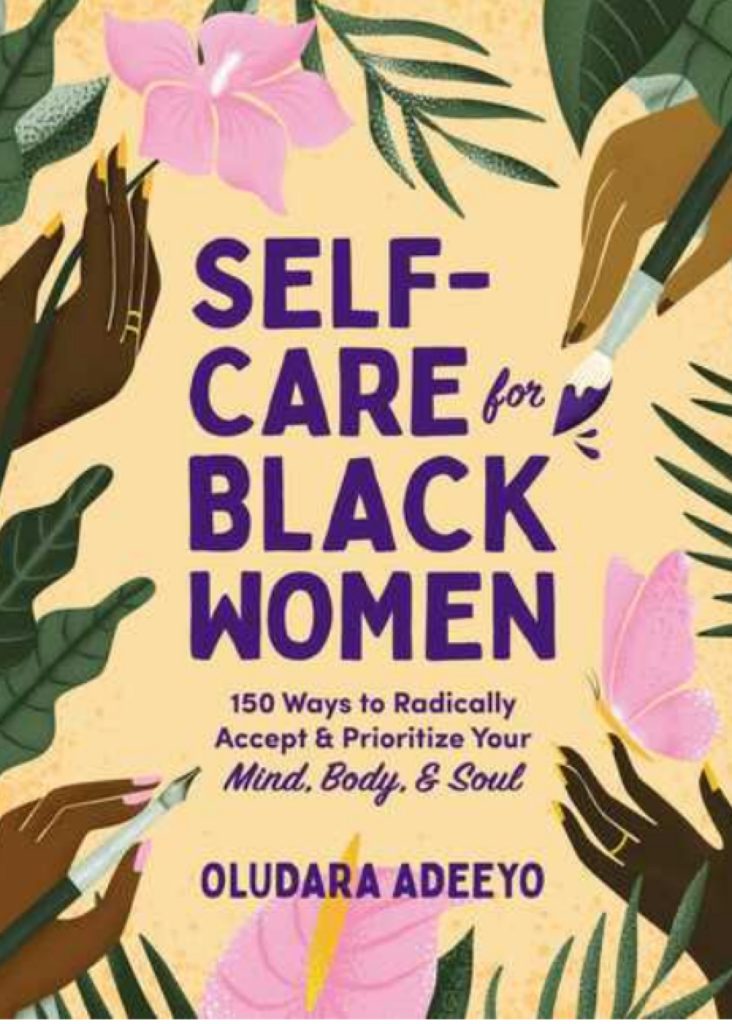
Self-care is indisputably necessary, perhaps more so for Black women. Anything intentionally done to maintain your health and well-being is self-care. Although people are free to book a massage, get a pedicure or take a vacation, spending money is not the only way to be deliberate about your well-being.
Author Oludara Adeeyo explains why self-care is important and offers several options that make committing to deliberate daily self-care realistic in her book, "Self-Care for Black Women: 150 Ways to Radically Accept and Prioritize Your Mind, Body and Soul." Adeeyo resides in California where she serves as a clinical social worker attending to the mental health issues of undomiciled individuals. Adeeyo welcomes her readers in a familiar voice by greeting us with a "Hey, Sis" and using other colloquialisms and gestures common to Black culture such as "*sucks teeth*" (often used to express disgust, disappointment and frustration). Terms such as "race-based traumatic stress" and "radical self-care" are defined while drawing readers in with an explanation of Adeeyo's theoretical stance on employing a holistic approach to practicing self-care. Her self-care method is straightforward: Use simple strategies that help individuals feel balanced as they foster a rejuvenation of the mind, body and soul. The remainder of the book is divided into three parts: mind, body and soul, providing self-care tactics specific to each. These techniques incorporate things that are readily accessible. For instance, in part one about the mind, readers are encouraged to practice deep breathing, journaling and grounding techniques such as connecting with your five senses, that are fan favorites for most therapists. Also included are methods such as ignoring your mobile devices in the mornings and reading for leisure. Adeeyo offers other effortless options in part two on the body, such as oiling your scalp and taking a nap. In part three on the soul, readers are prompted to take themselves on a date, travel somewhere alone and care for someone else by volunteering regularly in a place of importance to them.
Is this a book that therapists are urged to assign to their clients for use as an at-home guide? I cannot fully endorse it for that purpose. As mental health providers, we are trained to avoid causing undue harm to our clients. Some strategies such as "Heal Your Inner Child" are not a process heavily advised for clients to undergo on their own. Even though this approach acknowledges self-care is not always neat and pleasant, it also requires readers to dig deeper and prepare for the possibility of experiencing emotional distress. Such actions are useful for certain therapeutic processes but might be severely triggering for people unequipped to handle these methods without professional assistance. However, this is definitely a book that clinicians should use for suggesting ways to promote self-care to their clients. Remember, self-care is a daily necessity for holistically managing your well-being.
First published in Black Mental Health Today, Summer 2022 (Vol. 4).