
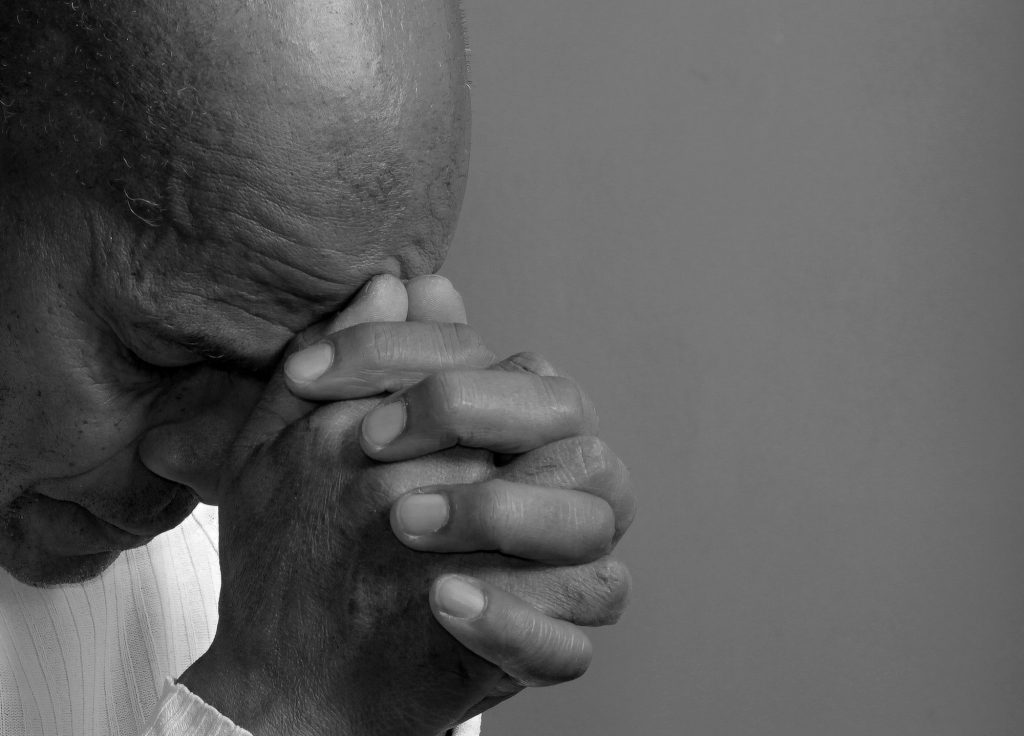
Pastors and mental health practitioners work together to elevate the overall health of the Black community
In the Black community, two topics are – seemingly – divergent: mental health and the Black church. Both present different methods for handling the unique challenges Black people face. Some in the Black community believe both allow people to preserve their sanity when dealing with difficult situations. Others believe that because they have their faith, they do not need mental health care.
Increasingly, members of the Black community are realizing that overall wellness is enhanced when treatment for mental health issues and support from faith-based institutions intersect. Historically, the Christian church has been the cornerstone of the Black community. During slavery, the only freedom many enslaved Black people had was when they gathered on Sunday for worship and prayer. So, the church became the standard for dealing with challenges in the Black community. Andrea Ross, a licensed professional counselor-supervisor with Another Way Therapeutic Center in Houston, Texas, who earned a Ph.D. in counselor education and supervision at Sam Houston State University, provides further insight into the Black church. "The church was the first place for Blacks to legally congregate. Church was the place where we found community and support. It was the place you could go to, tell God all about it and forget about your troubles. You could go to your pastor to get guidance, reassurance and validation. Dealing with issues outside of God – that was unheard of," she says. Even when people became aware of medical help for mental health issues, there were barriers to leveraging treatment because many people still opted to suffer in silence. "Trying to push your way through and do it on your own is something that culturally exists within the African American community," asserts the Rev. Kevin J. Griffin, pastor of First Mount Calvary Baptist Church in Charlotte, North Carolina, who earned a doctorate of ministry with a focus in leadership from Hood Theological Seminary. "Another is suspicion or distrust of health care – whether mental or primary – because of the history of issues that have occurred within our community."Joy Robbins, a licensed professional counselor-supervisor in Waxhaw, North Carolina, and owner of Creative Counseling and Consulting, who earned an M.A. in counseling from the University of North Carolina at Charlotte, discusses a cliché with which many Black people are familiar: "What goes on in this house, stays in this house."In our culture, it is not common for us to talk about our problems to other people. We want to keep things private and within our family system. There's also the notion that ‘If we just pray about it, we'll be OK.' Those are two things that really prohibit a lot of us from seeking mental health."Mental health and the Bible Chelsealya "Cookie" Payne founded Payne & Glory, a nonprofit in Austell, Georgia, whose Pain in the Pews mental health ministry bridges the gap between mental health care practitioners and faith-based organizations. She notes the Bible provides examples of issues surrounding mental health. "Biblically, there were people who suffered from mental health issues," notes Payne. "Elijah, for example, had several mental health challenges. God did not condemn him or berate him – he sent him help."Griffin explains how the Black church can help by speaking out about the well-being of the entire person. "When you think about holism," says Griffin, "it speaks to the entirety of a person. Jesus is not just interested in whether you can walk or that you are saved; he is also interested in you holistically being well. "As a consequence, the church should partner with whomever is able to bring a level of expertise and giftedness that will aid parishioners in their ability to be whole." According to Robbins, if the Black church is not careful, it can also hurt mental wellness among its people. She purports that while pastors are concerned with the spirituality of the person, as well as the other dimensions, they should not attempt to counsel someone with mental health concerns. Adds Ross: "Black pastors want to be able to bring mental health wellness to their congregants. They've expressed to me that dealing with mental health issues is beyond them. Because they impact how their members live their lives, pastors do not want to lead their parishioners in the wrong direction. They love their people and they want them to be OK."Robbins also stresses it's imperative for pastors and mental health practitioners to respect boundaries. "Some serious harm can be done if boundaries are not recognized. … Mental health practitioners must stay on the clinical side and clergy must stay on the spiritual/religious side. We must also understand that we're not competing. If we really work together, we can help parishioners be whole."
Access and visibility Planning and hosting church events related to mental health topics is also gaining momentum. Ross, for example, has connected with various faith leaders and churches over the years. "I have spoken with Black faith leaders who are open to giving counselors access to their congregations. They've invited me in for a one-day workshop or have had me come to their church to build a referral list that they can use for their congregants. Some churches that have more resources are building counselors into their ministries by implementing counseling ministries as part of their church," she says. Payne, through her nonprofit's mental health ministry, hosts mental health training and education for church and ministry leaders. "Pain in the Pews' mental health ministry has a panel of mental health experts that lead discussions. We discuss working with the congregation and helping them understand how to broach the conversation and normalize it. We also offer mental health first aid training. … "Let's start having lunch and learns about mental health," says Ross. "Let's start having women's tea events that are focused on wellness. The more that we incorporate that into the vision of the church, and not keep them so separate, the greater the possibility that things will keep moving in the right direction."Studies show the number of Black community members seeking mental health care support is beginning to pivot in a positive direction. Griffin, who earned a doctorate of ministry with a focus in leadership, is optimistic that the trajectory of Blacks seeking mental health support will continue to improve. "I think it's going to continue, but I think that it's not going to happen without persistent and consistent education. As we make it more approachable, combined with conversations in the ecclesial setting, I think that could potentially continue to allow more Black people to seek assistance. … If we're doing it correctly, mental health will be a normal part of what the church delivers as a part of its ministries to those who God has entrusted in their care."
First published in Black Mental Health Today, Fall 2022 (Vol. 5).